Minneapolis is rapidly evolving, and several neighborhoods are emerging as top growth hotspots for homebuyers, investors, and young professionals. Areas like Whittier, Longfellow, Powderhorn, Phillips, and Camden are experiencing rising property values, new development, and increasing residential demand. With vibrant food scenes, strong community culture, and convenient city amenities, these neighborhoods are becoming some of the fastest-growing places to live in Minneapolis, making them important locations to watch in the city’s expanding real estate market.
What Makes a Neighborhood “Fast Growing” in Minneapolis
A fast-growing neighborhood is not defined only by population growth. It also involves increasing property values, new housing developments, strong buyer demand, and access to key amenities. In Minneapolis, certain areas are experiencing rapid transformation due to infrastructure improvements, residential demand, and community investment, making them important locations for both homebuyers and real estate investors.
Rising Property Values
One of the clearest indicators of neighborhood growth is consistent property value appreciation. In several Minneapolis neighborhoods, increasing demand has steadily pushed home prices higher. This trend benefits both homeowners and investors because it signals strong long-term value. When property values rise steadily, the area becomes more desirable and resale potential increases significantly.
New Residential Development
New residential development often accelerates neighborhood growth. Across Minneapolis, many emerging neighborhoods are seeing construction of modern apartments, townhomes, and renovated historic houses. These developments attract new residents, increase housing availability, and stimulate local businesses. As new housing projects expand, neighborhoods become more vibrant and economically active.
Demand from Young Professionals
Minneapolis continues to attract young professionals seeking career opportunities and an active urban lifestyle. Neighborhoods with walkable streets, coffee shops, restaurants, and creative spaces appeal strongly to this demographic. As more young professionals move into an area, rental demand rises, new businesses open, and overall neighborhood development accelerates.
Access to Amenities
Amenities play a major role in neighborhood growth. Areas with easy access to parks, restaurants, schools, public transit, and entertainment typically attract more residents. Minneapolis neighborhoods that offer convenient transportation, vibrant dining scenes, and recreational spaces often experience stronger housing demand and long-term growth.
Top 5 Fastest Growing Neighborhoods in Minneapolis
Several Minneapolis neighborhoods stand out for their rapid development and increasing popularity. Whittier, Longfellow, Powderhorn, Phillips, and Camden are experiencing rising residential demand, improving infrastructure, and growing real estate value. These areas combine affordability, strong community culture, and convenient access to city amenities, making them key locations to watch.
Whittier – Creative Hub with a Vibrant Food Scene
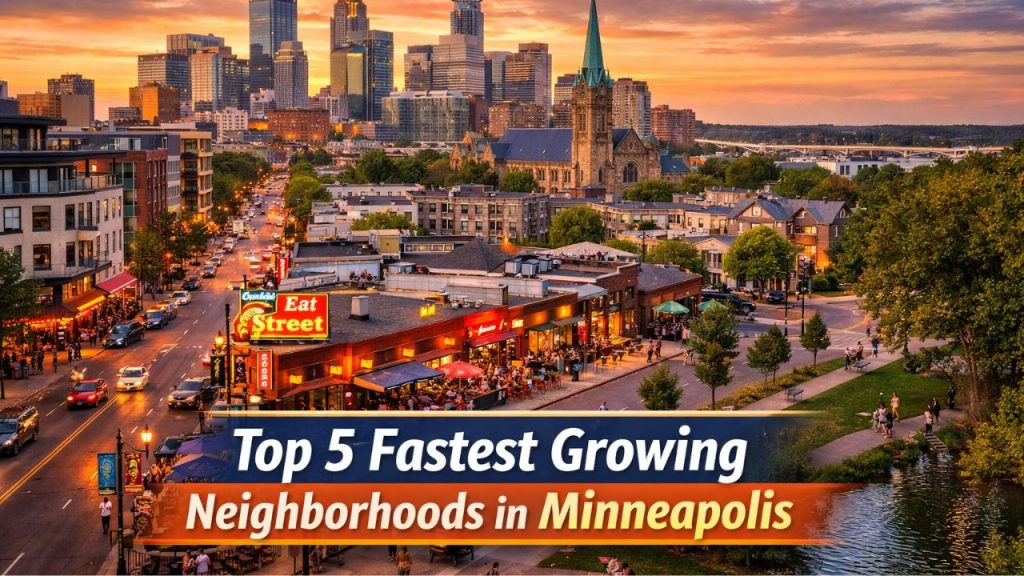
Whittier is one of Minneapolis’s most dynamic neighborhoods. Located near the Minneapolis College of Art and Design (MCAD), it attracts artists, students, and creative professionals. Nicollet Avenue, widely known as “Eat Street,” offers a diverse food scene with international restaurants and cafes. The strong presence of young professionals and creatives continues to drive rental demand and neighborhood popularity.
Longfellow – Rapid Property Appreciation Near the Mississippi River
Longfellow is gaining attention for its scenic location near the Mississippi River and its strong sense of community. The neighborhood offers parks, bike trails, and outdoor recreation opportunities that appeal to families and professionals. In recent years, home values in Longfellow have increased steadily, making it one of the most rapidly appreciating neighborhoods in Minneapolis.
Powderhorn – Cultural Diversity and Urban Revitalization
Powderhorn is known for its cultural diversity and vibrant community atmosphere. The neighborhood has seen increasing revitalization through renovated homes, new businesses, and community initiatives. Rising property values and a strong local arts scene make Powderhorn an attractive option for buyers and investors looking for emerging opportunities within Minneapolis.
Phillips – Central Location with Growing Residential Development
Phillips is located near central Minneapolis, providing residents with convenient access to major city districts. The neighborhood has strong community engagement and is experiencing increased residential development. Affordable housing options and improving infrastructure make Phillips appealing for individuals seeking urban living close to downtown.
Camden – Affordable Historic Homes and Green Spaces
Camden, located in North Minneapolis, is attracting attention for its affordability and historic housing options. Many homes in the area feature classic architectural styles, offering character at relatively lower prices. The neighborhood also provides access to parks and green spaces, making it appealing for families and first-time homebuyers seeking long-term growth potential.
Fastest Growing Minneapolis Suburbs to Watch
While Minneapolis neighborhoods are growing quickly, nearby suburbs are also experiencing significant population growth and housing development. Communities such as Dayton, Lakeville, and Woodbury are expanding due to new housing construction, strong infrastructure, and family-friendly environments.
Dayton – Fastest Growing Suburb
Dayton is widely considered one of the fastest-growing suburbs in the Minneapolis metropolitan area. Rapid population growth and new housing developments are transforming the community. With open spaces, new neighborhoods, and improving infrastructure, Dayton continues to attract families and commuters looking for suburban living close to the city.
Lakeville – Expanding Residential Community
Lakeville has developed into a thriving suburban community known for its family-friendly atmosphere and quality schools. The area continues to expand with new residential developments and local amenities. Its combination of suburban comfort and steady housing demand makes Lakeville an attractive destination for homebuyers.
Woodbury – Popular for Modern Housing and Amenities
Woodbury is a well-planned suburb known for modern housing developments and strong infrastructure. The community offers shopping centers, parks, and recreational facilities that enhance quality of life. Because of its amenities and economic stability, Woodbury remains one of the most desirable suburbs for families and professionals.
Why Young Professionals Are Moving to These Neighborhoods
The migration of young professionals into Minneapolis neighborhoods reflects the city’s strong economy and appealing urban lifestyle. Walkable communities, entertainment options, and career opportunities make these areas particularly attractive. As more professionals move into these neighborhoods, housing demand and local economic activity continue to grow.
Urban Lifestyle
Many young professionals prefer neighborhoods that provide a vibrant urban lifestyle. Minneapolis offers communities filled with coffee shops, coworking spaces, and cultural venues. Walkable streets and active social environments make these neighborhoods convenient and enjoyable places to live.
Food and Entertainment Scene
Dining and entertainment options are important factors when choosing where to live. Neighborhoods such as Whittier offer diverse restaurants and nightlife, particularly along Nicollet Avenue’s famous Eat Street. These vibrant food and entertainment scenes attract both residents and visitors.
Walkability and Transportation
Walkable communities and reliable transportation systems are essential for modern urban living. Minneapolis neighborhoods with access to public transit, bike paths, and pedestrian-friendly streets make commuting easier. These features increase convenience and contribute to neighborhood growth.
Affordable Housing Options
Housing affordability remains a key factor for many residents. Some emerging Minneapolis neighborhoods offer relatively lower home prices and rental costs compared to more established areas. This affordability encourages young professionals and first-time buyers to settle in these communities.
Real Estate Investment Potential in Minneapolis
Minneapolis continues to present strong opportunities for real estate investors. Population growth, housing demand, and urban development contribute to a stable and expanding property market. Investing in emerging neighborhoods can provide long-term property appreciation and consistent rental income.
Rental Demand
Rental demand in Minneapolis remains strong due to the presence of young professionals, students, and new residents moving into the city. Growing neighborhoods often experience higher demand for apartments and rental homes, creating reliable income opportunities for property owners.
Long-Term Property Appreciation
Real estate appreciation is one of the most important considerations for investors. As neighborhoods continue to develop and attract residents, property values typically increase over time. Minneapolis’s emerging neighborhoods offer strong potential for long-term value growth.
Best Areas for First-Time Buyers
First-time homebuyers often look for neighborhoods that offer both affordability and future growth potential. Areas such as Camden and Phillips provide relatively accessible home prices while still benefiting from ongoing development. Purchasing property early in these neighborhoods may offer long-term financial advantages.
Tips for Buying Property in Minneapolis Neighborhoods
Buying property in Minneapolis requires careful planning and research. Understanding local market conditions, neighborhood amenities, and property details can help buyers make informed decisions and avoid potential risks.
Research Property Records
Property records provide important details about ownership history, taxes, and legal information. Reviewing these records helps buyers confirm property information and ensure transparency during the purchasing process.
Check Local Market Trends
Monitoring housing market trends such as price changes and buyer demand can help buyers identify the best time to purchase property. Understanding local trends also helps investors evaluate potential returns.
Evaluate Amenities and Transportation
Amenities such as schools, parks, shopping centers, and public transportation significantly influence property value and livability. Buyers should carefully evaluate these factors before selecting a neighborhood.
Work with Local Real Estate Experts
Experienced local real estate agents understand Minneapolis market conditions and neighborhood trends. Working with professionals can help buyers identify good opportunities, negotiate effectively, and navigate the purchasing process smoothly.
Conclusion: The Future of Minneapolis Neighborhood Growth
Minneapolis neighborhoods continue to evolve as development, cultural diversity, and housing demand increase. Whittier, Longfellow, Powderhorn, Phillips, and Camden are among the fastest-growing areas in the city. With rising property values, strong community culture, and expanding amenities, these neighborhoods offer promising opportunities for both residents and real estate investors.
FAQs
What is the fastest growing town in Minnesota?
Dayton is often considered one of the fastest-growing towns in Minnesota due to rapid population growth, new residential developments, and expanding infrastructure. Its proximity to Minneapolis and availability of modern housing communities make it attractive for families and commuters seeking suburban living near the Twin Cities.
What is the richest suburb of Minneapolis?
Edina is widely known as one of the richest suburbs of Minneapolis. The area features luxury homes, high median household income, top-rated schools, and upscale shopping areas like Southdale Center. Because of its strong economy and amenities, Edina remains one of the most desirable suburbs in the Minneapolis metro area.
What is the best area to live in Minneapolis?
The best area to live in Minneapolis depends on lifestyle and budget. Popular neighborhoods include Whittier, Longfellow, and Powderhorn because they offer vibrant communities, access to parks, restaurants, and convenient transportation. These neighborhoods are also experiencing steady real estate growth and increasing demand among young professionals.
What are the nicest suburbs of Minneapolis?
Some of the nicest suburbs of Minneapolis include Edina, Woodbury, Lakeville, Maple Grove, and Eden Prairie. These suburbs are known for excellent schools, safe neighborhoods, modern housing developments, and access to parks, shopping centers, and family-friendly amenities.
Why are Minneapolis neighborhoods growing so quickly?
Minneapolis neighborhoods are growing due to strong job opportunities, affordable housing compared to other major cities, and ongoing urban development. The city’s walkable communities, vibrant food culture, and expanding infrastructure continue to attract young professionals, families, and real estate investors.
Which Minneapolis neighborhoods have the best investment potential?
Neighborhoods such as Whittier, Longfellow, Powderhorn, Phillips, and Camden are considered promising for real estate investment. These areas are experiencing rising property values, new residential development, and increasing rental demand, making them attractive for long-term property appreciation.
Are Minneapolis suburbs good for families?
Yes, many Minneapolis suburbs are ideal for families. Communities like Lakeville, Woodbury, and Eden Prairie offer quality schools, safe neighborhoods, parks, and family-friendly amenities. These suburbs provide a quieter lifestyle while still offering convenient access to Minneapolis employment centers.
Is Minneapolis a good place for real estate investment?
Minneapolis can be a strong real estate investment market due to consistent population growth, high rental demand, and developing neighborhoods. Investors often look at emerging areas and nearby suburbs where property prices are still relatively affordable but have strong potential for future appreciation.